Step 1: Understand BOI Requirements for U.S. Businesses
The Corporate Transparency Act (CTA) requires certain U.S. entities to file Beneficial Ownership Information (BOI) reports with the Financial Crimes Enforcement Network (FinCEN). These filings help the U.S. government identify individuals who directly or indirectly own or control companies. As of 2025, the BOI reporting obligations include:- All domestic corporations, LLCs, and similar entities formed by filing with a U.S. state.
- Foreign entities registered to do business in the U.S.
- Legal and trade names
- Tax identification numbers (TINs)
- Beneficial owners’ full names, birth dates, addresses, and ID numbers
Step 2: Maintain Accurate and Updated Ownership Records
Accuracy is critical for compliance. Common mistakes include outdated ownership data, missing IDs, or failing to update records after corporate changes. To remain compliant:- Update your BOI filings within 30 days of any ownership change.
- Maintain consistent ownership information across all tax filings.
- Coordinate with your tax and legal advisors to centralize entity management.
Step 3: Recognize the Link Between BOI and IC-DISC Structures
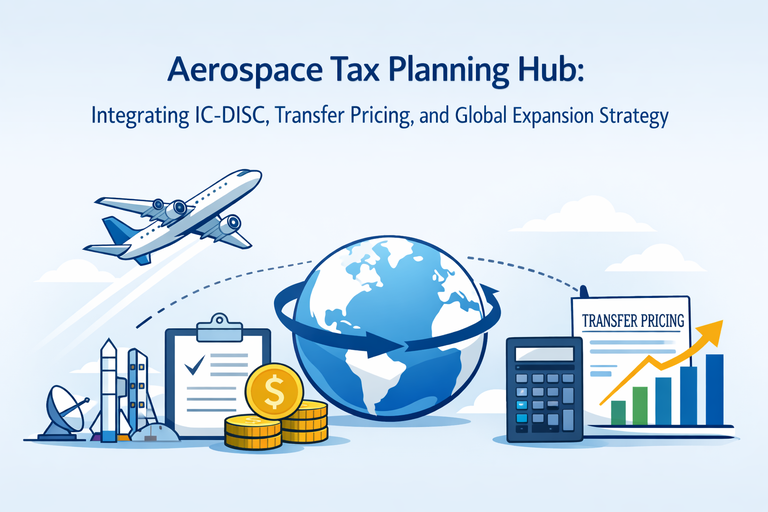
If your company uses an IC-DISC to reduce export taxes, ensure that both your operating entity and IC-DISC entity comply with BOI requirements. Since an IC-DISC is a separate corporation, it must file its own BOI report—even if ownership overlaps with the parent company. Failure to file can lead to significant penalties, including:- Civil fines up to $500 per day for non-compliance.
- Criminal penalties for willful violations.
Step 4: Review BEPS 2.0 and Global Minimum Tax Requirements
The OECD’s BEPS 2.0 framework—particularly Pillar One and Pillar Two—introduces major shifts in global taxation:- Pillar One: Allocates taxing rights to markets where customers are located, regardless of physical presence.
- Pillar Two: Implements a 15% global minimum tax on multinational enterprises with revenue exceeding €750 million.
Step 5: Strengthen Transfer Pricing and Documentation
BEPS compliance is rooted in accurate transfer pricing documentation. Businesses should:- Conduct annual benchmarking updates.
- Align intercompany transactions with DEMPE principles (Development, Enhancement, Maintenance, Protection, and Exploitation of intangibles).
- Prepare a Master File and Local File consistent with OECD guidelines.
Step 6: Implement Continuous Monitoring and Compliance Systems
Tax compliance is no longer a once-a-year task.- Implement real-time monitoring tools for ownership and intercompany data.
- Schedule quarterly compliance reviews.
- Integrate BOI and BEPS compliance into your company’s internal controls and risk management systems.