Bridging the Gap Between Design and Execution
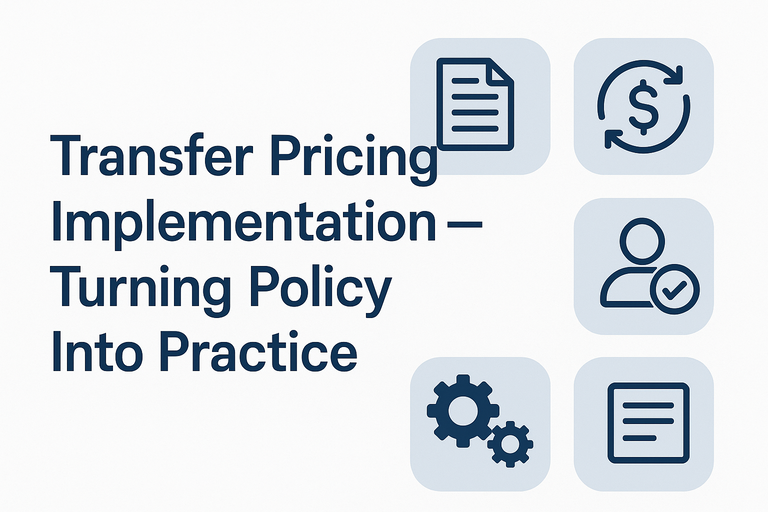
Many multinational groups invest heavily in developing robust transfer pricing policies — benchmarking studies, comparability analyses, and documentation that check every compliance box. Yet, when it comes to execution, gaps often emerge. The challenge lies in transfer pricing implementation — turning theoretical frameworks into practical, auditable, and automated processes. At WTP Advisors, we help companies transform policy into performance. Our focus goes beyond what’s written in reports — we embed transfer pricing logic directly into business systems, ensuring every transaction reflects the arm’s-length principle in real time.Why Implementation Is a Critical Step
As explained in What Is Transfer Pricing?, the concept centers on related parties transacting as if they were independent. But designing that principle is only half the work. The real test comes when it’s time to apply it — invoice by invoice, region by region, across dozens of entities and currencies. Without proper implementation, even the best-designed policy can fail. Errors in data mapping, misapplied mark-ups, or delayed adjustments can create compliance risks and distort profit allocations. The objective is clear: align theory, data, and operations so transfer pricing becomes a built-in control, not an afterthought.Key Components of Effective Implementation
1. Operational Mapping Start by identifying where transfer pricing actually touches your business processes. This means linking intercompany policies to the right operational workflows — manufacturing, procurement, logistics, R&D, and shared services. Each flow must have a clear transfer price driver (cost base, margin, royalty, etc.). 2. Data Integration The most common breakdown in transfer pricing implementation occurs at the data level. Transactional systems may use cost definitions that differ from those in tax models. WTP Advisors helps reconcile these variations by mapping chart-of-account data to transfer pricing cost bases. The result: consistent, automated calculations that remove human error. 3. System Automation Embedding transfer pricing rules into ERP systems such as SAP or Oracle allows prices to be calculated automatically, based on approved formulas. Automated workflows reduce manual adjustments, enforce compliance, and generate auditable data trails. 4. Real-Time Monitoring Ongoing validation is essential. By building variance dashboards, companies can track monthly profit margins against target arm’s-length ranges. Alerts signal when results drift, enabling proactive corrections before audits or filings. 5. Governance and Accountability Effective implementation depends on clear ownership. Each entity should know who is responsible for maintaining, updating, and validating its pricing logic. WTP Advisors supports clients in designing governance frameworks that define accountability at both local and global levels.From Documentation to Execution
Implementation connects policy to performance. The documentation may define the methodology, but execution determines its credibility. For example, if a cost-plus service provider consistently earns below its benchmark mark-up due to cost misallocations, regulators can challenge the entire model — regardless of what the report says. Our Transfer Pricing Case Studies highlight this dynamic. One client had a compliant policy on paper, yet their actual transactional data told a different story. By embedding pricing formulas directly into their ERP, we closed the gap between design and execution, resulting in a smoother audit and consistent profitability across regions.Technology as an Enabler
Digital transformation has made transfer pricing implementation more achievable than ever. Automation tools now allow companies to:- Reconcile intercompany data instantly across multiple systems.
- Validate margins against benchmark ranges monthly.
- Generate real-time documentation for each transaction.
Common Implementation Pitfalls
- Disjointed Systems: Transfer pricing and accounting often operate in silos. Integration resolves inconsistencies.
- Lack of Testing: Formulas should be validated with sample data before rollout.
- No Feedback Loops: Without monitoring, small deviations become large audit risks.
- Undertrained Staff: Local finance teams must understand the “why” behind pricing logic, not just the “how.”
Conclusion
Successful transfer pricing implementation means closing the gap between what your documentation says and what your systems actually do. When pricing models, financial data, and governance are fully aligned, compliance becomes automatic — not reactive. At WTP Advisors, we bring together tax, technology, and operations expertise to help businesses operationalize transfer pricing from design to execution. The result is consistency, transparency, and confidence — every transaction, every time.PREVIOUS ARTICLEThe Modern Transfer Price Formula | Using Data to Drive Accuracy