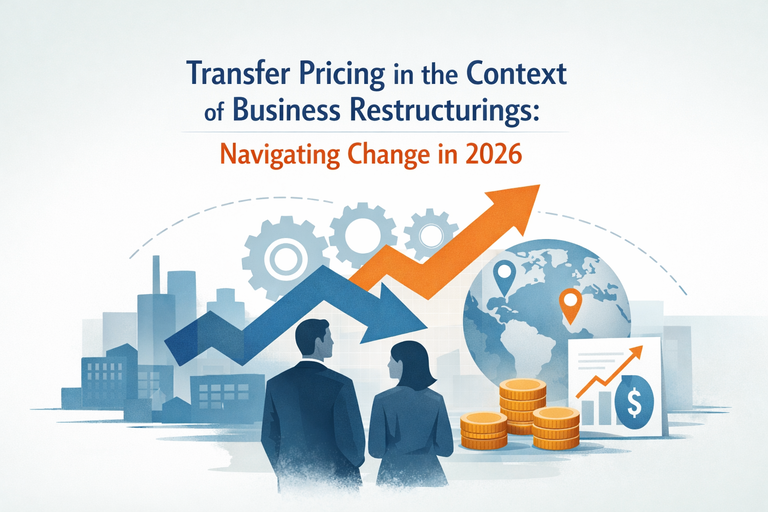
Multinational enterprises (MNEs) frequently undertake business restructurings to optimize their operations, enhance efficiency, or adapt to changing market conditions. These restructurings can involve significant changes to the allocation of functions, assets, and risks among group entities, such as converting a full-fledged distributor into a limited-risk distributor, centralizing procurement, or relocating manufacturing activities. Such changes inevitably trigger complex transfer pricing considerations, which, if not properly managed, can lead to substantial tax risks and disputes. In 2026, MNEs must meticulously plan and execute the transfer pricing aspects of business restructurings to ensure compliance and avoid unintended tax consequences.
Understanding Business Restructurings and Their Transfer Pricing Impact
A business restructuring, for transfer pricing purposes, is defined as the cross-border reorganization of commercial or financial relations between associated enterprises, including the termination or substantial renegotiation of existing arrangements. The key transfer pricing challenges arise from:
- Delineation of the Restructured Transaction Clearly identifying the commercial and financial relations before and after the restructuring is crucial. This involves a thorough functional analysis to determine which entities perform which functions, use which assets, and assume which risks.
- Compensation for Restructuring When a restructuring results in the termination or transfer of valuable functions, assets, or risks from one entity to another, the entity giving up these elements may be entitled to arm’s length compensation. This often involves valuing transferred intangibles, customer lists, or the loss of future profits.
- Pricing of New or Modified Intercompany Transactions The new or modified intercompany transactions resulting from the restructuring (e.g., new service agreements, revised distribution arrangements) must be priced at arm’s length. This requires updated benchmarking studies and intercompany agreements.
- Exit Taxes In some jurisdictions, the transfer of assets or functions out of the country as part of a restructuring can trigger exit taxes, particularly if valuable intangibles are involved.
Common Types of Business Restructurings and TP Considerations
- Conversion of Full-Fledged Distributors to Limited-Risk Distributors This involves shifting significant risks (e.g., inventory, market risk) and potentially valuable intangibles (e.g., marketing intangibles) from the local distributor to a central principal. The distributor’s remuneration typically changes from a residual profit share to a routine return, and compensation for the transferred risks/assets may be due.
- Centralization of Functions Consolidating functions like procurement, R&D, or shared services in a central entity requires careful pricing of the intercompany services provided by the centralized entity to other group members.
- Relocation of Manufacturing Moving manufacturing operations from one country to another can involve the transfer of tangible assets, IP, and workforce, all of which have transfer pricing implications for valuation and compensation.
- Transfer of Intangibles The outright sale or licensing of valuable IP (e.g., patents, trademarks) between group entities is a high-risk area, requiring robust valuation and documentation under the DEMPE framework.
Documentation and Risk Mitigation Strategies
Given the complexity and high scrutiny associated with business restructurings, comprehensive transfer pricing documentation is essential. This should include:
- Commercial Rationale A clear explanation of the business reasons for the restructuring.
- Functional Analysis A detailed before-and-after comparison of functions, assets, and risks for each affected entity.
- Compensation Analysis Valuation of any transferred assets, functions, or risks, including intangibles, using appropriate methods (e.g., Relief from Royalty, Discounted Cash Flow).
- Post-Restructuring TP Policy Updated intercompany agreements, benchmarking studies, and pricing for new or modified transactions.
- Exit Tax Assessment Analysis of potential exit tax implications in relevant jurisdictions.
MNEs should proactively plan restructurings with transfer pricing in mind from the outset, conduct pre-restructuring impact assessments, maintain robust documentation, and consider Advance Pricing Agreements (APAs) or advance rulings to secure certainty on compensation amounts, valuation methodologies, and post-restructuring pricing.
FAQs on Transfer Pricing in Business Restructurings
Q1: What is a business restructuring for transfer pricing purposes?
A1: A business restructuring, in the transfer pricing context, refers to the cross-border reorganization of commercial or financial relations between associated enterprises, including the termination or substantial renegotiation of existing arrangements. It often involves changes in the allocation of functions, assets, and risks among group entities.
Q2: When is compensation required in a business restructuring?
A2: Compensation is generally required when one entity transfers or terminates valuable functions, assets (including intangibles), or risks to another group entity as part of the restructuring. The entity giving up these elements should receive arm’s length compensation for the loss of profit potential or transferred value, determined through appropriate valuation methods.
Q3: What are common examples of compensation in restructurings?
A3: Common examples include lump-sum payments or ongoing royalties for transferred intangibles (e.g., marketing know-how, customer lists), exit payments for loss of future profits when converting a full-fledged distributor to a limited-risk distributor, or compensation for transferred workforce or tangible assets.
Q4: How do exit taxes interact with transfer pricing in restructurings?
A4: Exit taxes are imposed by some jurisdictions when assets or functions are transferred out of the country, treating the transfer as a deemed sale at fair market value. Transfer pricing principles are used to determine the arm’s length value of the transferred assets (especially intangibles), which forms the basis for calculating any exit tax liability.
Q5: What steps should MNEs take to manage transfer pricing risks during a restructuring?
A5: MNEs should conduct a pre-restructuring transfer pricing impact assessment, perform detailed before-and-after functional analyses, value any transferred assets or lost profit potential, update intercompany agreements, prepare comprehensive documentation justifying the commercial rationale and arm’s length nature of the restructuring, and consider seeking APAs or advance rulings for certainty.