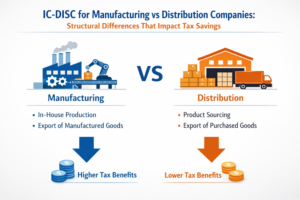
Introduction: Same IC-DISC Rules, Very Different Outcomes
On paper, IC-DISC rules apply uniformly to exporters. In reality,
manufacturing and distribution companies experience materially different results under IC-DISC structures.
Treating these models as interchangeable is one of the most common—and costly—mistakes exporters make. Structural differences in risk, margin control, and operational substance directly affect both
tax savings and audit defensibility.
Manufacturing Companies: Where IC-DISC Usually Delivers Maximum Value
Manufacturers typically control:
- Product design
- Production processes
- Cost structures
- Pricing strategy
This concentration of value creation aligns well with IC-DISC economics.
Why Manufacturing Models Work Well
- Higher gross margins support larger commissions
- Clear linkage between U.S. activity and export income
- Easier substantiation of economic substance
When properly structured, manufacturers often achieve
stable, defensible IC-DISC savings.
Related reading:
Distribution Companies: Where Complexity Increases Risk
Distributors often operate on thinner margins and perform fewer high-value functions.
Distribution-Specific Challenges
- Limited pricing authority
- Lower operating margins
- Greater exposure to benchmarking scrutiny
For distributors, IC-DISC savings are more sensitive to margin shifts and pricing assumptions. Overstated commissions are a frequent audit trigger.
Related reading:
Functional Differences That Matter to the IRS
The IRS does not classify companies by label. It evaluates
what they actually do.
Key Functional Distinctions
| Factor |
Manufacturer |
Distributor |
| Product control |
High |
Low |
| Pricing authority |
High |
Moderate to Low |
| Risk assumption |
Significant |
Limited |
| Margin volatility |
Moderate |
High |
IC-DISC structures that ignore these differences rarely survive examination.
Commission Methodologies: One Size Fails Both
Manufacturers and distributors often default to the same commission calculation methods. This is a mistake.
Manufacturer-Friendly Approaches
- Profit-based methods tied to production economics
- Methods reflecting control over IP and processes
Distributor-Specific Adjustments
- Conservative commission caps
- Tight alignment with transfer pricing benchmarks
- Frequent redeterminations
Failure to tailor methodology to business model leads to overstated savings and audit risk.
Related reading:
Transfer Pricing Interactions: Where Errors Multiply
Manufacturers and distributors face different transfer pricing pressures.
- Manufacturers must defend where value is created
- Distributors must defend why margins are limited
IC-DISC structures that contradict transfer pricing narratives are especially vulnerable during audits and due diligence.
Related reading:
Structural Changes That Break Assumptions
Many companies start as manufacturers and evolve into hybrid models.
Events That Require Reassessment
- Outsourcing or contract manufacturing
- Adding foreign distribution entities
- Shifting pricing authority abroad
Failing to reassess IC-DISC assumptions after these changes is a common—and avoidable—mistake.
Related reading:
Choosing the Right Structure—Not the Most Aggressive One
Manufacturers usually have more IC-DISC upside.
Distributors require tighter controls and realistic expectations.
The goal is not maximum commissions.
The goal is
defensible savings that survive scrutiny.
Final Thought: Structure Drives Outcomes
IC-DISC success is not dictated by eligibility alone. It is dictated by
how closely the structure matches economic reality.
Manufacturers who recognize this unlock consistent value.
Distributors who ignore it invite problems.