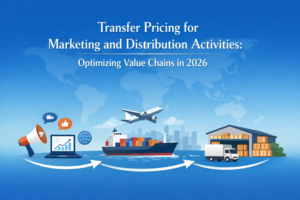
Marketing and distribution activities are crucial components of a multinational enterprise’s (MNE) value chain, directly impacting sales, brand recognition, and market penetration. However, the transfer pricing of these activities, particularly the remuneration of distributors and the allocation of marketing intangibles, remains a complex and frequently audited area. In 2026, MNEs must carefully structure and price their intercompany marketing and distribution arrangements to ensure arm’s length compliance, reflect economic substance, and optimize their global tax position.
Characterizing Distribution Models
The transfer pricing approach for distribution activities largely depends on the functional profile of the distributor. Common models include:
- Full-Fledged Distributor: Assumes significant risks (e.g., inventory, market, credit), performs extensive marketing and sales functions, and often owns valuable marketing intangibles. Such distributors are typically entitled to a residual profit after covering routine costs.
- Limited-Risk Distributor (LRD): Assumes limited risks, often operating on a buy-sell basis but with risks largely borne by the principal. Their remuneration is typically a routine return, often determined using the Transactional Net Margin Method (TNMM) with a focus on operating margins.
- Commissionaire/Agent: Does not take title to goods and acts as an agent, earning a commission on sales. Assumes minimal risks. Remuneration is typically a commission based on sales volume or value.
Key Transfer Pricing Considerations
- Functional Analysis: A thorough functional analysis is paramount to accurately delineate the functions performed, assets used, and risks assumed by the distributor and the principal. This includes assessing who bears inventory risk, credit risk, market risk, and who performs key marketing activities.
- Marketing Intangibles: A significant area of contention is the ownership and remuneration of marketing intangibles (e.g., brand names, customer lists, marketing know-how). If a local distributor undertakes significant marketing activities that build or enhance a brand, they may be entitled to a return for these contributions, even if the legal ownership of the brand resides with the principal. The DEMPE framework (Development, Enhancement, Maintenance, Protection, Exploitation) is critical here.
- Pricing Methodologies: The most commonly applied methods for distribution activities are:
- Resale Price Method (RPM): Often preferred when the distributor adds little value to the product and resells to independent customers. It focuses on the gross margin.
- Transactional Net Margin Method (TNMM): Widely used for LRDs, comparing the distributor’s net operating margin to that of comparable independent companies.
- Comparable Uncontrolled Price (CUP) Method: Applicable if comparable transactions exist where an independent distributor sells the same or similar products.
- Intercompany Agreements: Clear and comprehensive intercompany agreements are essential. They should accurately reflect the chosen distribution model, the allocation of functions, assets, and risks, and the pricing mechanism. These agreements provide legal certainty and support the arm’s length nature of the arrangements.
- Benchmarking: Robust benchmarking studies are required to support the arm’s length nature of the remuneration. This involves identifying comparable independent distributors and analyzing their financial performance.
Challenges and Best Practices in 2026
- Digital Marketing: The rise of digital marketing channels complicates the attribution of marketing activities and the creation of marketing intangibles. MNEs need to analyze who performs and funds digital marketing campaigns and how this impacts value creation.
- E-commerce and Online Sales: The growth of e-commerce platforms introduces new questions about where sales are generated and which entity performs the key functions related to online sales.
- Supply Chain Restructuring: Changes in global supply chains, often driven by geopolitical factors or ESG considerations, can significantly alter distribution models and require a re-evaluation of transfer pricing policies.
Best Practices:
- Regular Review: Periodically review and update functional analyses and intercompany agreements to reflect changes in business operations and market conditions.
- Detailed Documentation: Maintain comprehensive transfer pricing documentation that clearly justifies the chosen distribution model and pricing methodology.
- Proactive Risk Assessment: Identify potential areas of dispute, especially concerning marketing intangibles, and consider Advance Pricing Agreements (APAs) for certainty.
FAQs on Transfer Pricing for Marketing and Distribution Activities
Q1: What is the primary difference between a full-fledged distributor and a limited-risk distributor (LRD) from a transfer pricing perspective?
A1: A full-fledged distributor assumes significant risks (e.g., inventory, market, credit) and performs extensive marketing functions, often owning marketing intangibles, entitling them to a residual profit. An LRD assumes limited risks, with most risks borne by the principal, and is typically remunerated with a routine return for its less complex functions.
Q2: How are marketing intangibles relevant in transfer pricing for distribution?
A2: Marketing intangibles, such as brand names and customer lists, are highly relevant because if a local distributor undertakes significant marketing activities that build or enhance a brand, they may be entitled to a return for these contributions, even if the legal ownership of the brand rests with the principal. The DEMPE framework is used to determine which entity performs the value-creating activities for these intangibles.
Q3: Which transfer pricing methods are most commonly applied to distribution activities?
A3: The most common methods are the Resale Price Method (RPM), often used when the distributor adds little value and resells to independent customers; the Transactional Net Margin Method (TNMM), widely applied for LRDs to compare their net operating margin; and the Comparable Uncontrolled Price (CUP) Method, if direct comparables for product sales exist.
Q4: Why are intercompany agreements crucial for marketing and distribution activities?
A4: Intercompany agreements are crucial because they legally define the chosen distribution model, the allocation of functions, assets, and risks, and the pricing mechanism. These agreements provide legal certainty, support the arm’s length nature of the arrangements, and are a key piece of evidence during tax audits.
Q5: How does the rise of digital marketing and e-commerce impact transfer pricing for distribution?
A5: Digital marketing and e-commerce complicate transfer pricing by blurring geographical boundaries for sales and marketing activities. MNEs need to carefully analyze which entity performs and funds digital marketing campaigns, where sales are generated, and how these activities contribute to value creation, especially concerning the development and ownership of marketing intangibles in the digital space.