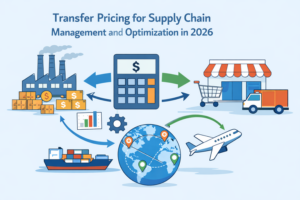
Supply chain management is a critical function for multinational enterprises (MNEs), encompassing the entire process from raw material sourcing to product delivery to the end customer. As MNEs continuously seek to optimize their supply chains for efficiency, cost reduction, and resilience, the transfer pricing implications of these strategies become paramount. In 2026, with increasing global complexities and regulatory scrutiny, aligning transfer pricing policies with supply chain design is essential to ensure compliance, manage tax risks, and unlock operational synergies.
The Interplay Between Supply Chain Design and Transfer Pricing
Every decision made in supply chain design—such as where to locate manufacturing facilities, how to manage inventory, or which entity bears specific risks—has direct transfer pricing consequences. The core principle is that the allocation of profits within an MNE group should reflect the functions performed, assets employed, and risks assumed by each entity in the supply chain.
Key areas of interaction include:
- Manufacturing Models Whether an MNE operates with full-fledged manufacturers, contract manufacturers, or toll manufacturers significantly impacts the allocation of risks (e.g., inventory, market, R&D) and the remuneration of the manufacturing entity. Full-fledged manufacturers typically earn residual profits, while contract and toll manufacturers earn routine returns.
- Procurement and Sourcing Centralized procurement functions can generate significant cost savings. The transfer pricing challenge lies in remunerating the central procurement entity at arm’s length for its services and allocating the benefits of bulk purchasing to the entities that ultimately consume the goods or services.
- Logistics and Warehousing The entities responsible for logistics, warehousing, and transportation services must be appropriately remunerated. This involves determining whether these are routine support services or if they involve significant risks and assets that warrant a higher return.
- Inventory Management The entity that bears the inventory risk (e.g., obsolescence, damage) should be compensated for that risk. This is a critical factor in determining the functional profile of distributors and manufacturers.
- Risk Allocation Supply chain optimization often involves centralizing certain risks (e.g., market risk, foreign exchange risk) in a principal entity. Transfer pricing must ensure that the principal has the financial capacity and functional capability to manage these risks and is appropriately remunerated for doing so.
Transfer Pricing Strategies for Supply Chain Optimization
- Principal Company Structure Many MNEs adopt a principal company structure, where a central entity (the principal) takes on significant risks and ownership of intangibles, while other entities (e.g., contract manufacturers, limited-risk distributors) perform routine functions and earn routine returns. This structure aims to centralize profits in the principal, often located in a favorable tax jurisdiction.
- Shared Service Centers (SSCs) Establishing SSCs for functions like finance, HR, or IT can drive efficiency. The transfer pricing for SSCs typically involves charging out costs with a small mark-up for routine services, ensuring the benefit test is met for all recipients.
- Value Chain Analysis A comprehensive value chain analysis helps MNEs understand where value is created within their supply chain and how this aligns with their transfer pricing policies. This analysis is crucial for justifying profit allocations to tax authorities.
- Intercompany Agreements Robust intercompany agreements are essential to legally document the roles, responsibilities, risks, and remuneration of each entity in the optimized supply chain. These agreements provide the contractual basis for the transfer pricing policies.
Challenges and Best Practices in 2026
- Regulatory Scrutiny Tax authorities are increasingly scrutinizing supply chain restructurings and the resulting profit allocations, particularly when they lead to significant shifts in taxable income.
- Digitalization of Supply Chains The adoption of technologies like AI, IoT, and blockchain in supply chain management can create new value drivers and alter functional profiles, requiring updated transfer pricing analyses.
- ESG Considerations ESG factors are influencing supply chain design (e.g., local sourcing, sustainable practices), which can have indirect transfer pricing implications.
Best Practices:
- Holistic Approach Integrate transfer pricing considerations into supply chain design from the outset, rather than as an afterthought.
- Detailed Functional Analysis Conduct a thorough and regularly updated functional analysis to reflect the actual activities, assets, and risks of each supply chain entity.
- Robust Documentation Maintain comprehensive transfer pricing documentation that clearly explains the commercial rationale for the supply chain structure and the arm’s length nature of intercompany transactions.
- Proactive Risk Management Identify potential areas of dispute and consider Advance Pricing Agreements (APAs) for complex supply chain arrangements.
FAQs on Transfer Pricing for Supply Chain Management and Optimization
Q1: How does the choice of manufacturing model (e.g., full-fledged, contract, toll) impact transfer pricing in a supply chain?
A1: The manufacturing model significantly impacts transfer pricing by determining the allocation of functions, assets, and risks. A full-fledged manufacturer typically bears significant risks and owns IP, entitling it to residual profits. A contract manufacturer performs routine functions for a fee, with the principal bearing most risks. A toll manufacturer processes materials owned by the principal, earning a fee for its services. Each model requires different transfer pricing methodologies and profit allocations.
Q2: What are the transfer pricing considerations for centralized procurement functions?
A2: For centralized procurement, the key transfer pricing consideration is to remunerate the central entity at arm’s length for its procurement services. This often involves a service fee based on costs plus a mark-up, or a share of the cost savings generated. It’s crucial to demonstrate that the entities benefiting from the centralized procurement receive a tangible benefit and that the charges are allocated appropriately.
Q3: How does risk allocation within a supply chain affect transfer pricing?
A3: Risk allocation is fundamental to transfer pricing. The entity that contractually assumes and functionally controls significant risks (e.g., inventory risk, market risk, foreign exchange risk) and has the financial capacity to bear those risks should be compensated for doing so. This often means that entities bearing higher risks are entitled to higher potential returns (or losses), while entities with limited risks earn routine returns.
Q4: What is a “principal company structure” in the context of supply chain transfer pricing?
A4: A principal company structure involves a central entity (the principal) that typically owns the valuable intangibles, assumes significant risks (e.g., market, R&D, inventory), and performs strategic functions. Other entities in the supply chain (e.g., contract manufacturers, limited-risk distributors) perform routine functions and are remunerated with routine returns. This structure aims to centralize profits in the principal entity.
Q5: Why is a holistic approach to supply chain design and transfer pricing important in 2026?
A5: A holistic approach is important because supply chain decisions have direct and significant transfer pricing consequences. Integrating transfer pricing considerations from the outset ensures that the operational design aligns with tax objectives, minimizes tax risks, and avoids costly restructurings or disputes later. It allows MNEs to proactively manage their global tax position and optimize their value chain for both operational efficiency and tax compliance.