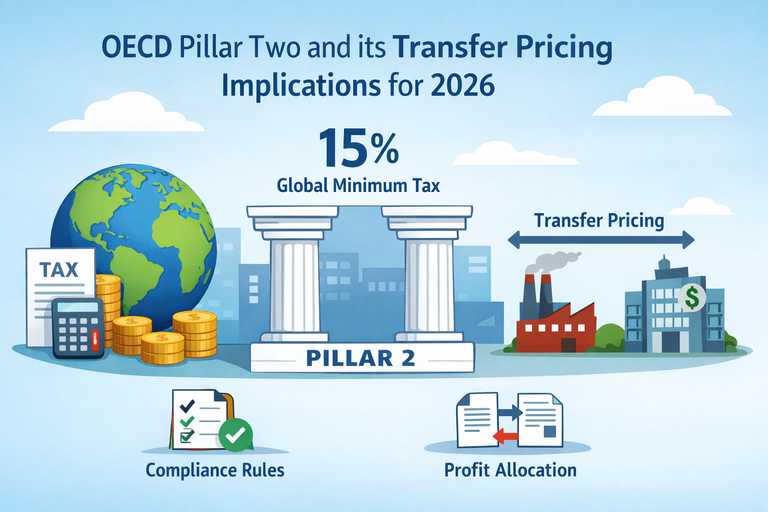
OECD Pillar Two and its Transfer Pricing Implications for 2026

The global tax landscape is undergoing a significant transformation with the implementation of the OECD’s Pillar Two initiative, also known as the Global Anti-Base Erosion (GloBE) rules. These rules aim to ensure that multinational enterprises (MNEs) pay a minimum effective tax rate of 15% on their profits in every jurisdiction where they operate. While primarily… Continue reading OECD Pillar Two and its Transfer Pricing Implications for 2026

Transfer Pricing for Marketing and Distribution Activities: Optimizing Value Chains in 2026
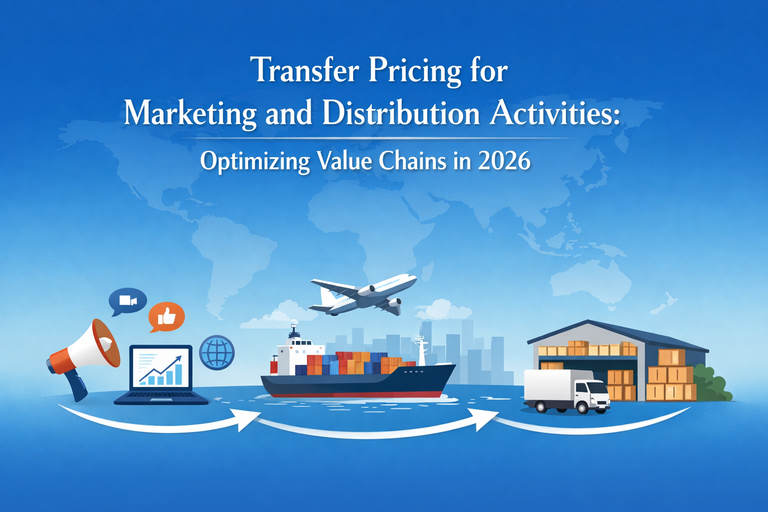
Marketing and distribution activities are crucial components of a multinational enterprise’s (MNE) value chain, directly impacting sales, brand recognition, and market penetration. However, the transfer pricing of these activities, particularly the remuneration of distributors and the allocation of marketing intangibles, remains a complex and frequently audited area. In 2026, MNEs must carefully structure and price… Continue reading Transfer Pricing for Marketing and Distribution Activities: Optimizing Value Chains in 2026
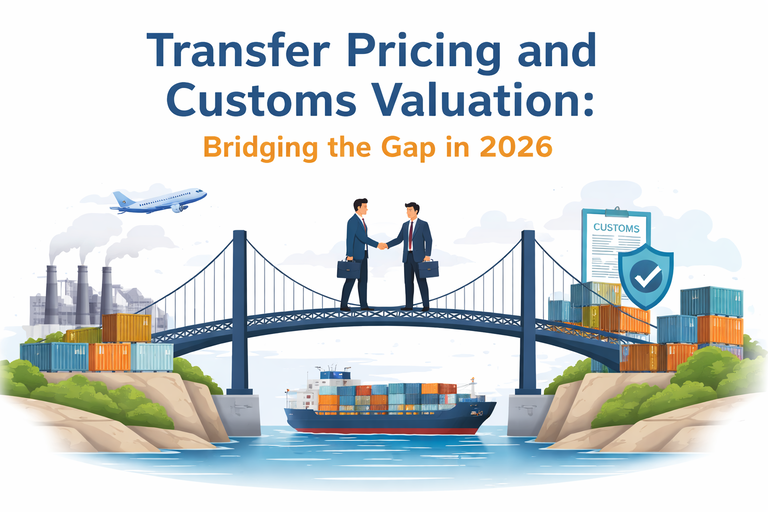
Transfer Pricing and Customs Valuation: Bridging the Gap in 2026

Multinational enterprises (MNEs) that import goods from related parties face a complex challenge at the intersection of two distinct regulatory regimes: transfer pricing and customs valuation. While both aim to establish an “arm’s length” value for goods, their methodologies, objectives, and enforcement bodies differ, often leading to conflicting requirements and potential double taxation. In 2026,… Continue reading Transfer Pricing and Customs Valuation: Bridging the Gap in 2026

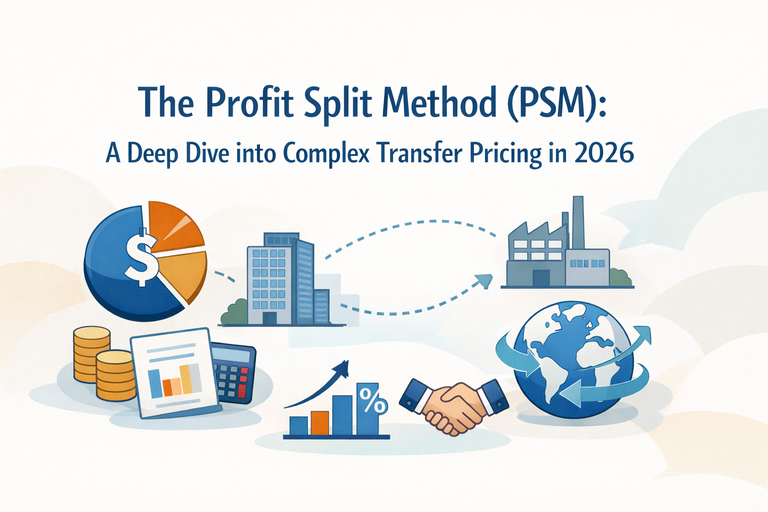
The Profit Split Method (PSM): A Deep Dive into Complex Transfer Pricing in 2026

The Profit Split Method (PSM) is one of the five recognized transfer pricing methods under the Organisation for Economic Co-operation and Development (OECD) Transfer Pricing Guidelines. Unlike one-sided methods that test the profitability of a single entity, the PSM is a two-sided method that allocates the combined profits or losses from a transaction between associated… Continue reading The Profit Split Method (PSM): A Deep Dive into Complex Transfer Pricing in 2026

WTP Advisors’ Transfer Pricing Practice achieves 3 Plus Years as a Recommended Firm ranking in World Tax

Minneapolis, MN, February 26, 2026 — WTP Advisors proudly announces its achievements in the World Tax 2026 rankings. The Transfer Pricing practice has once again secured a ranking on the prestigious platform for over three years as a Recommended Firm, which affirms its status as a leader in the Transfer Pricing market.  In addition, Kash… Continue reading WTP Advisors’ Transfer Pricing Practice achieves 3 Plus Years as a Recommended Firm ranking in World Tax

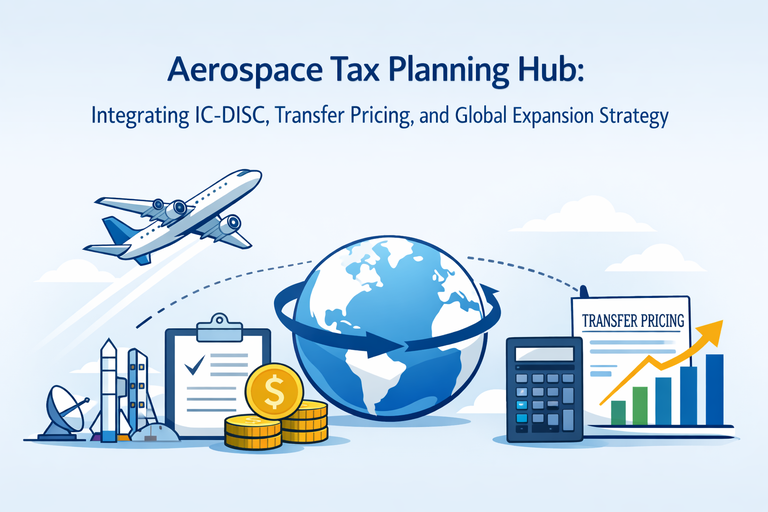
Aerospace Tax Planning Hub: Integrating IC-DISC, Transfer Pricing, and Global Expansion Strategy

The aerospace industry operates at the intersection of export incentives, complex supply chains, regulatory oversight, and cross-border expansion. For aircraft parts manufacturers, MRO providers, avionics suppliers, and defense contractors, tax strategy must be integrated — not siloed. This hub outlines how aerospace companies should coordinate IC-DISC planning, transfer pricing, state tax exposure, and global structuring… Continue reading Aerospace Tax Planning Hub: Integrating IC-DISC, Transfer Pricing, and Global Expansion Strategy

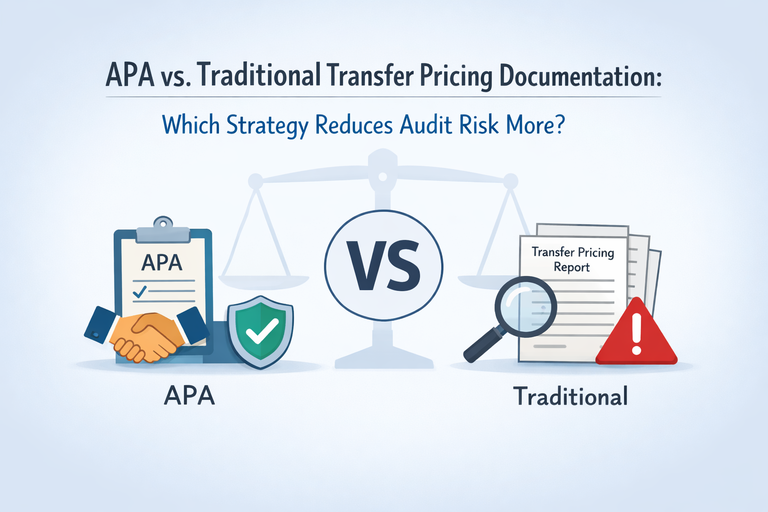
APA vs. Traditional Transfer Pricing Documentation: Which Strategy Reduces Audit Risk More?

As IRS enforcement intensifies, mid-market multinationals are asking a critical question: Is standard transfer pricing documentation enough — or is an Advance Pricing Agreement (APA) the better defense? Both approaches aim to manage risk under IRC Section 482. However, they differ significantly in cost, certainty, administrative burden, and strategic value. This article compares APA agreements… Continue reading APA vs. Traditional Transfer Pricing Documentation: Which Strategy Reduces Audit Risk More?

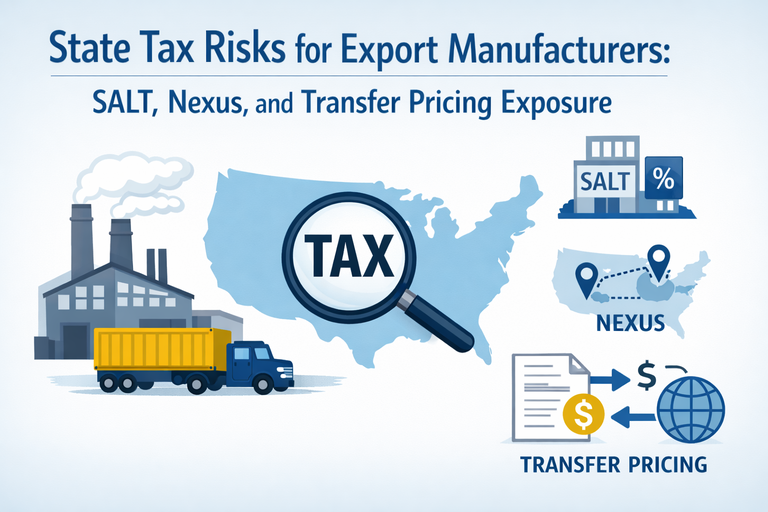
State Tax Risks for Export Manufacturers: SALT, Nexus, and Transfer Pricing Exposure

Export-driven manufacturers often focus heavily on federal tax planning — IC-DISC optimization, transfer pricing documentation, and international structuring. However, state and local tax (SALT) exposure can quietly erode those savings. For mid-market exporters, particularly in aerospace, industrial equipment, and technology manufacturing, state tax risks are expanding. This guide explains where exposure arises and how to… Continue reading State Tax Risks for Export Manufacturers: SALT, Nexus, and Transfer Pricing Exposure

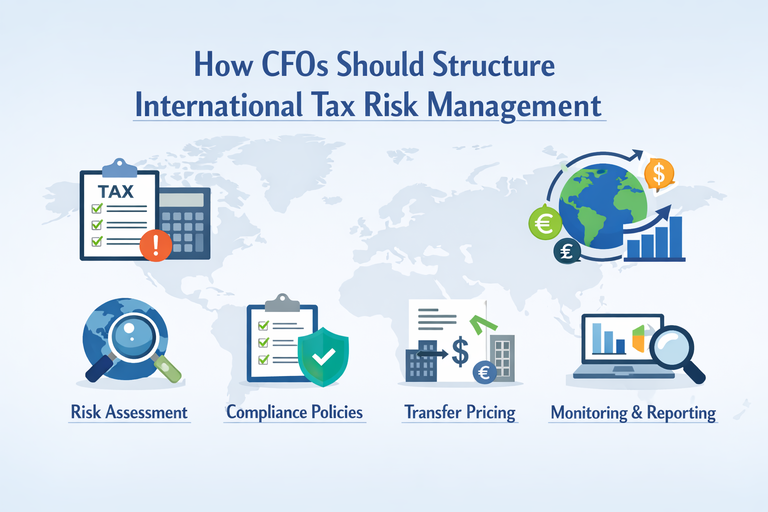
How CFOs Should Structure International Tax Risk Management

For mid-market multinationals and export-driven companies, international tax risk is no longer a compliance issue handled at year-end. It is a balance sheet, cash flow, and valuation issue that demands executive oversight. CFOs must build structured, repeatable frameworks that integrate transfer pricing, IC-DISC optimization, SALT exposure, and global compliance — while preserving audit defensibility. Below… Continue reading How CFOs Should Structure International Tax Risk Management

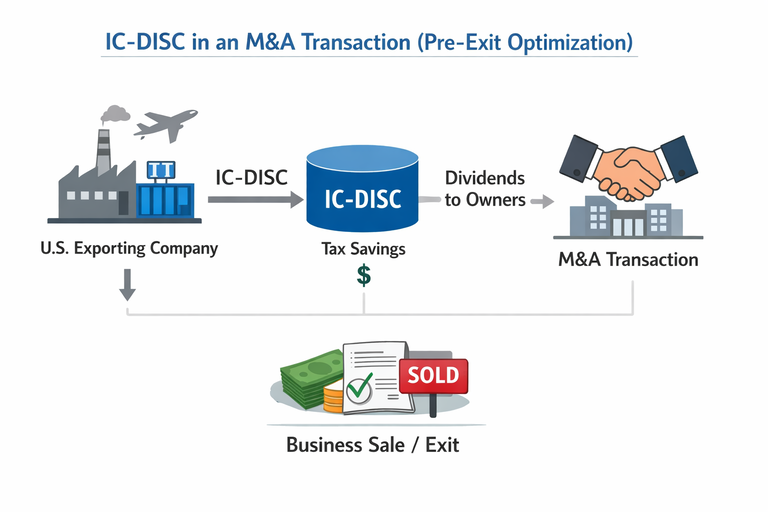
IC-DISC in an M&A Transaction: Pre-Exit Optimization Strategies That Increase Valuation

In export-driven businesses, the IC-DISC (Interest Charge Domestic International Sales Corporation) can materially influence transaction value. Yet many companies enter an M&A process without reviewing whether their IC-DISC structure is optimized, defensible, or even functioning correctly. For shareholders, private equity sponsors, and CFOs, IC-DISC planning before a sale is not a compliance detail — it… Continue reading IC-DISC in an M&A Transaction: Pre-Exit Optimization Strategies That Increase Valuation