Foreign Tax Credits Explained — How to Avoid Double Taxation (and When It Backfires)

If your business earns income abroad, you’ll eventually face the nightmare scenario: the same profit gets taxed twice—once overseas and again in the US. The foreign tax credit (FTC) system exists to reduce double taxation. But here’s the part most companies learn the hard way: Foreign tax credits don’t automatically “fix” double tax. If you… Continue reading Foreign Tax Credits Explained — How to Avoid Double Taxation (and When It Backfires)

Withholding Tax 101 — When US Companies Must File 1042/1042-S (and How Treaties Change It)
If your US company pays non-US persons—contractors, vendors, licensors, lenders, partners—there’s a decent chance you’ve triggered US withholding rules. And here’s the problem: withholding is not a “tax-season” issue. It’s a payment-time issue. If you get it wrong, the IRS can treat you (the payer) as liable for the tax you should have withheld, plus… Continue reading Withholding Tax 101 — When US Companies Must File 1042/1042-S (and How Treaties Change It)
Inbound vs. Outbound International Tax — The Rules, Risks, and Common Mistakes

Most companies get international tax wrong for a simple reason: they don’t even classify their situation correctly. Inbound and outbound international tax are not two flavors of the same thing. They’re different rule sets, different risk profiles, and different compliance triggers. If you mix them up, you’ll choose the wrong structure, miss filings, and discover… Continue reading Inbound vs. Outbound International Tax — The Rules, Risks, and Common Mistakes

Forms 5471, 8858, and 8865: Which Foreign Entity Reporting Form Applies?

Updated November 3, 2026 Form 5471 generally concerns foreign corporations, Form 8858 concerns foreign disregarded entities and foreign branches, and Form 8865 concerns foreign partnerships. However, entity type alone does not establish a filing obligation. U.S. tax classification, ownership, control, reportable transactions, and filing exceptions determine the answer. Start With U.S. Tax Classification A foreign… Continue reading Forms 5471, 8858, and 8865: Which Foreign Entity Reporting Form Applies?

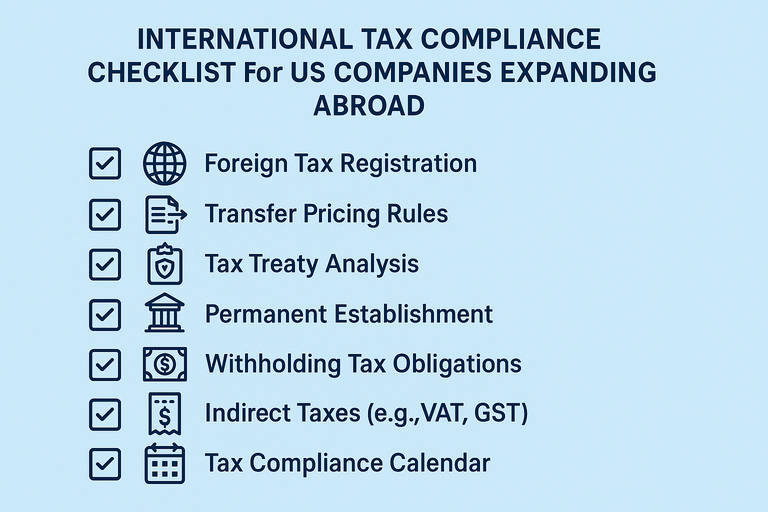
International Tax Compliance Checklist for U.S. Companies Expanding Abroad: The First 90 Days

Updated November 3, 2026 Before expanding internationally, map your activities, confirm entity classifications, identify U.S. and foreign reporting obligations, and assign responsibility for compliance. Review related-party pricing, overseas personnel, bank accounts, and payment arrangements before operations begin. This 90-day checklist is a suggested project schedule, not a legal grace period. Registrations, elections, withholding, or other… Continue reading International Tax Compliance Checklist for U.S. Companies Expanding Abroad: The First 90 Days

Transfer Pricing Documentation: Requirements and an Audit-Readiness Checklist

Updated November 3, 2026 Transfer pricing documentation explains how a business prices transactions between related entities and supports why those results are consistent with the arm’s length principle. Effective documentation connects business activities, pricing methods, financial results, and supporting evidence. Requirements vary by jurisdiction, transaction, and company size. What Is Transfer Pricing Documentation? Transfer pricing… Continue reading Transfer Pricing Documentation: Requirements and an Audit-Readiness Checklist

Transfer Pricing Implementation: Turning Policy Into Practice

Updated November 3, 2026 Transfer pricing implementation translates an approved intercompany pricing policy into calculations, invoices, accounting entries, and review procedures. It connects the economic analysis supporting a policy with the transactions actually recorded by the business. The objective is consistent execution and reliable evidence—not an assumption that a report or automated system guarantees compliance.… Continue reading Transfer Pricing Implementation: Turning Policy Into Practice

The Modern Transfer Price Formula | Using Data to Drive Accuracy

From Static to Intelligent Pricing Transfer pricing used to be a once-a-year compliance exercise, where finance teams calculated cost bases, applied a standard mark-up, and hoped the result aligned with benchmarks. But global tax authorities, digital business models, and data transparency have changed everything. The modern transfer price formula is no longer static — it’s… Continue reading The Modern Transfer Price Formula | Using Data to Drive Accuracy

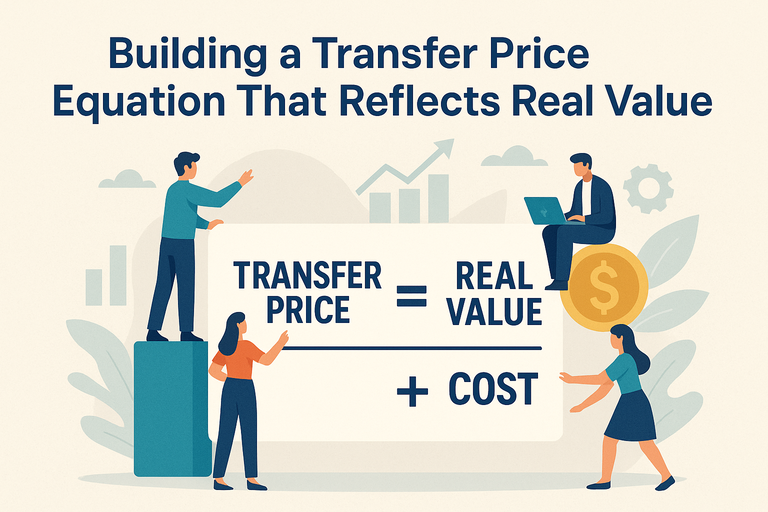
Building a Transfer Price Equation That Reflects Real Value

From Numbers to Narrative A well-designed transfer price equation is more than arithmetic — it’s a narrative that expresses how your organization creates and shares value. In modern transfer pricing, equations serve as the bridge between financial models and business reality. They translate functional analyses, risk assessments, and benchmarking results into quantifiable pricing logic that… Continue reading Building a Transfer Price Equation That Reflects Real Value

How to Calculate the Minimum Transfer Price | Safeguarding Margins and Compliance

The Importance of Defining a Defensible Floor Setting intercompany prices is not just about compliance — it’s about ensuring each entity within a multinational group earns a fair and sustainable return. The ability to calculate the minimum transfer price is central to that effort. This figure represents the lowest acceptable price that remains consistent with… Continue reading How to Calculate the Minimum Transfer Price | Safeguarding Margins and Compliance