Foreign Tax Credits Explained — How to Avoid Double Taxation (and When It Backfires)

If your business earns income abroad, you’ll eventually face the nightmare scenario: the same profit gets taxed twice—once overseas and again in the US. The foreign tax credit (FTC) system exists to reduce double taxation. But here’s the part most companies learn the hard way: Foreign tax credits don’t automatically “fix” double tax. If you… Continue reading Foreign Tax Credits Explained — How to Avoid Double Taxation (and When It Backfires)

Withholding Tax 101 — When US Companies Must File 1042/1042-S (and How Treaties Change It)
If your US company pays non-US persons—contractors, vendors, licensors, lenders, partners—there’s a decent chance you’ve triggered US withholding rules. And here’s the problem: withholding is not a “tax-season” issue. It’s a payment-time issue. If you get it wrong, the IRS can treat you (the payer) as liable for the tax you should have withheld, plus… Continue reading Withholding Tax 101 — When US Companies Must File 1042/1042-S (and How Treaties Change It)
Inbound vs. Outbound International Tax — The Rules, Risks, and Common Mistakes

Most companies get international tax wrong for a simple reason: they don’t even classify their situation correctly. Inbound and outbound international tax are not two flavors of the same thing. They’re different rule sets, different risk profiles, and different compliance triggers. If you mix them up, you’ll choose the wrong structure, miss filings, and discover… Continue reading Inbound vs. Outbound International Tax — The Rules, Risks, and Common Mistakes

Forms 5471, 8858, and 8865 — Which One Applies When You Own Foreign Entities?

If you own or control foreign entities, US international tax compliance is not optional—and it’s not “just paperwork.” Forms 5471, 8858, and 8865 are three of the most common US information returns that get triggered when a US person (individual or business) expands abroad. They’re also some of the easiest to mess up because companies… Continue reading Forms 5471, 8858, and 8865 — Which One Applies When You Own Foreign Entities?

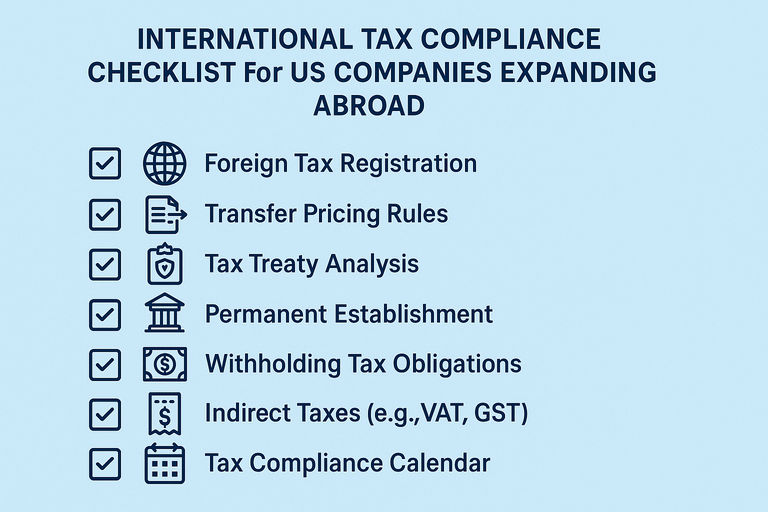
International Tax Compliance Checklist for US Companies Expanding Abroad (First 90 Days)

Expanding outside the United States isn’t just a growth move. It’s a compliance event. Most US companies don’t get “hit” by international tax because they did something shady. They get hit because they moved fast—opened a bank account overseas, hired a contractor in another country, formed a subsidiary, started invoicing cross-border—and didn’t realize those actions… Continue reading International Tax Compliance Checklist for US Companies Expanding Abroad (First 90 Days)

Transfer Pricing Documentation — Building a Global Defense Strategy

The Foundation of Audit Defense In the world of international taxation, transfer pricing documentation is more than a compliance formality — it’s your first and strongest line of defense. As tax authorities increase scrutiny and data exchange between jurisdictions becomes seamless, well-prepared documentation demonstrates transparency, consistency, and control. At WTP Advisors, we view documentation not… Continue reading Transfer Pricing Documentation — Building a Global Defense Strategy

Transfer Pricing Implementation — Turning Policy Into Practice

Bridging the Gap Between Design and Execution Many multinational groups invest heavily in developing robust transfer pricing policies — benchmarking studies, comparability analyses, and documentation that check every compliance box. Yet, when it comes to execution, gaps often emerge. The challenge lies in transfer pricing implementation — turning theoretical frameworks into practical, auditable, and automated… Continue reading Transfer Pricing Implementation — Turning Policy Into Practice

The Modern Transfer Price Formula | Using Data to Drive Accuracy

From Static to Intelligent Pricing Transfer pricing used to be a once-a-year compliance exercise, where finance teams calculated cost bases, applied a standard mark-up, and hoped the result aligned with benchmarks. But global tax authorities, digital business models, and data transparency have changed everything. The modern transfer price formula is no longer static — it’s… Continue reading The Modern Transfer Price Formula | Using Data to Drive Accuracy

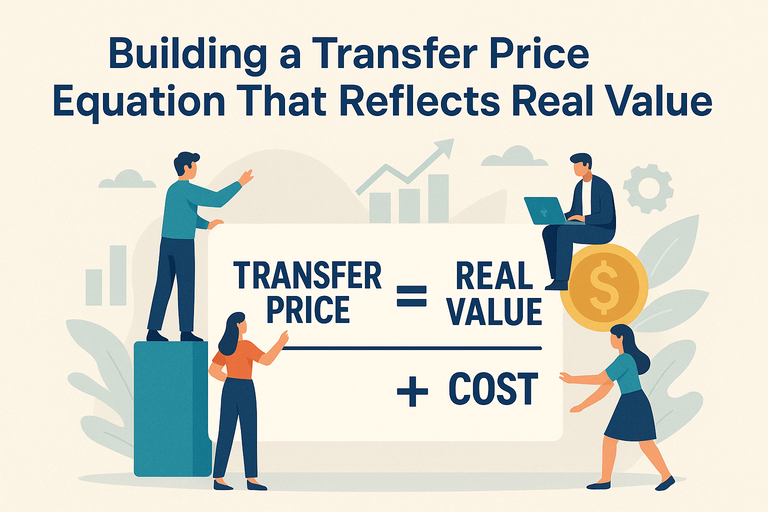
Building a Transfer Price Equation That Reflects Real Value

From Numbers to Narrative A well-designed transfer price equation is more than arithmetic — it’s a narrative that expresses how your organization creates and shares value. In modern transfer pricing, equations serve as the bridge between financial models and business reality. They translate functional analyses, risk assessments, and benchmarking results into quantifiable pricing logic that… Continue reading Building a Transfer Price Equation That Reflects Real Value

How to Calculate the Minimum Transfer Price | Safeguarding Margins and Compliance

The Importance of Defining a Defensible Floor Setting intercompany prices is not just about compliance — it’s about ensuring each entity within a multinational group earns a fair and sustainable return. The ability to calculate the minimum transfer price is central to that effort. This figure represents the lowest acceptable price that remains consistent with… Continue reading How to Calculate the Minimum Transfer Price | Safeguarding Margins and Compliance