The core difference (don’t overcomplicate it)
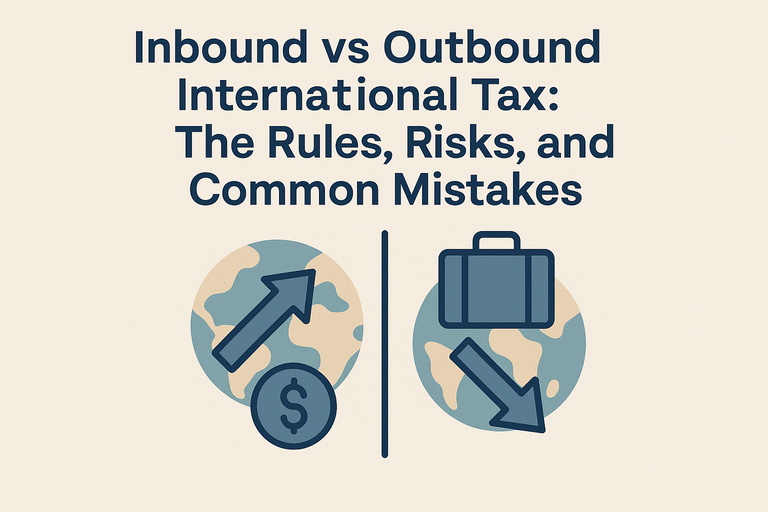
Outbound international tax
This is when a US person or US company expands outside the US. Examples:- US company forms a foreign subsidiary
- US company opens a foreign branch
- US founders set up a foreign operating company
- US business starts employing people abroad
- foreign entity reporting and disclosure
- cross-border transfer pricing
- withholding and repatriation mechanics
- anti-deferral regimes (depending on facts)
Inbound international tax
This is when a foreign person or foreign company has US operations or US income. Examples:- foreign parent owns a US subsidiary
- foreign company sells into the US with a US presence
- foreign owners invest in a US business
- foreign company hires US employees or sets up a US office
- whether there is US “trade or business” / effectively connected income
- treaty positions
- withholding rules
- profit stripping / intercompany financing issues
- state tax exposure and nexus problems
Outbound: The biggest risks US companies underestimate
1) “We set up a foreign entity, so we’re done”
No. That’s when your obligations start. Outbound expansion commonly triggers:- US information reporting (ownership and foreign activity disclosures)
- local country corporate filings, VAT/GST, payroll obligations
- intercompany agreements and transfer pricing documentation
2) Permanent Establishment (PE) risk is ignored until it’s expensive
PE is basically: “Did you create a taxable presence in that foreign country?” Common PE triggers:- employees abroad negotiating or signing contracts
- dependent agents who effectively close deals
- a fixed place of business (office, warehouse, dedicated space)
- ongoing services or project activity
3) Transfer pricing becomes fiction
Outbound companies often start intercompany charging like this:- “We’ll figure it out later”
- “Just bill something reasonable”
- “No one will care”
- who owns IP
- who takes risk
- where value is created
- who should earn what profit
Inbound: The biggest risks foreign-owned groups miss in the US
1) They underestimate US complexity (federal + state)
Even if you handle federal correctly, state exposure can surprise you:- state income tax filings
- sales tax obligations
- payroll tax registrations
- nexus created by employees, inventory, or even certain service activities
2) Withholding is misunderstood and misapplied
Many inbound situations involve payments that may require withholding:- interest
- royalties
- service payments (depending on facts)
- dividends
- certain cross-border payments
3) Intercompany financing and “profit stripping” gets attention
If a foreign parent loads a US entity with:- high interest expense,
- large management fees,
- royalties,
- cost allocations,
The mistake that harms both inbound and outbound: confusing tax residence with business reality
Companies love clean narratives:- “We’re a US company”
- “We’re a foreign company”
- “We’re remote-first”
- where people work
- where decisions are made
- where contracts are signed
- where customers are served
- where inventory sits
- who owns and exploits IP
Common mistakes (the ones you can prevent)
Mistake #1: Picking an entity type based on convenience, not consequences
“Let’s just form a local entity because it’s easy to open a bank account.” That’s how you inherit obligations you didn’t budget for.Mistake #2: No compliance map
If you can’t list:- what returns you file,
- in which countries/states,
- by what deadlines,
- using what source data,
Mistake #3: Treating transfer pricing like a template exercise
If your intercompany pricing doesn’t track reality, the documentation won’t save you.Mistake #4: Waiting until tax season
By then, you’re reconstructing history. Reconstruction is where mistakes and penalties live.A quick self-diagnosis: which one are you?
Answer these questions:- Is the parent US or foreign?
- Where are the employees actually working?
- Where are contracts negotiated and signed?
- Do you have entities outside the US or inside the US (or both)?
- Are there intercompany payments (fees, royalties, interest)?
- Are you moving cash across borders (dividends, loans, reimbursements)?
What to do next (depending on your situation)
If you’re outbound (US expanding abroad)
Do this now:- build a country-by-country compliance matrix
- document intercompany relationships and pricing policy early
- evaluate PE risk before hiring/sending people abroad
- align reporting with your finance close process
If you’re inbound (foreign-owned with US activity)
Do this now:- confirm US trade/business exposure and filing posture
- analyze withholding and treaty documentation needs
- assess state nexus and registrations
- stress-test intercompany charges for defensibility