What “repatriation” actually means (and why it becomes messy)
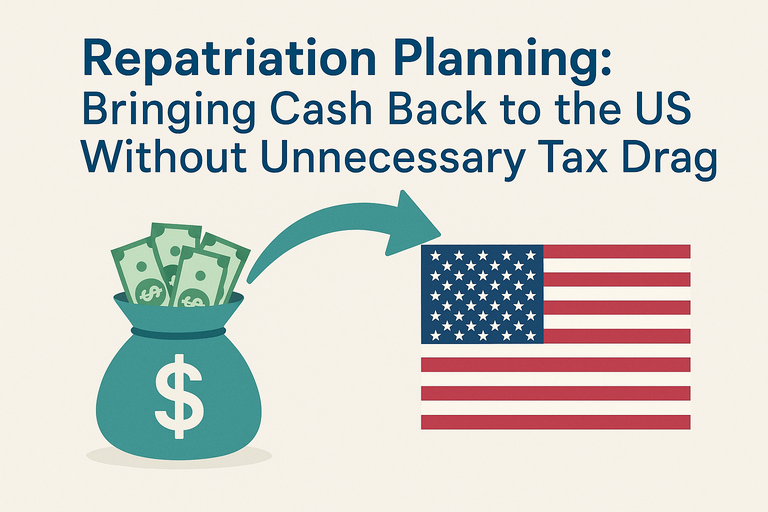
Repatriation is simply moving cash from foreign operations back to the US parent or US owners. Common routes include:- Dividends (profit distributions)
- Intercompany loans (debt)
- Royalties / service fees (payments for IP or services)
- Return of capital (where applicable)
- Upstreaming cash through multiple layers (sub → holding company → US parent)
- foreign withholding taxes,
- US tax consequences,
- documentation requirements,
- and audit exposure.
The biggest repatriation mistake: waiting until you need the cash
Most companies don’t plan repatriation. They react. They discover they need US cash for:- payroll,
- acquisitions,
- debt service,
- investor expectations,
- or simply to stop hoarding idle cash abroad.
- upstreaming triggers withholding,
- loan documentation is missing,
- intercompany pricing is undocumented,
- and local statutory restrictions apply.
The main repatriation methods (and the tradeoffs)
1) Dividends (the obvious option — not always the cheapest)
Pros- Simple conceptually
- Clear legal framework
- Often easiest to explain in diligence
- Can trigger withholding tax abroad
- Depends on distributable profits under local rules
- Timing restrictions (board approvals, statutory accounts)
2) Intercompany loans (useful, but dangerous when done casually)
Pros- Can move cash without a dividend
- Flexible timing and repayment terms
- Potentially avoids certain dividend constraints
- Requires real loan documentation (terms, interest, repayment expectations)
- Interest payments can trigger withholding
- Thin capitalization / earnings stripping issues can arise depending on facts
- Tax authorities scrutinize “loans” that behave like permanent capital
3) Royalties and service fees (powerful, but high-audit)
Pros- Can align with actual value provided (IP, management services, support)
- Can be structured as recurring flows (useful for cash management)
- May be more “operationally natural” for certain businesses (e.g., software)
- Often triggers withholding abroad
- Requires defensible transfer pricing
- Requires intercompany agreements and real operational substance
4) Return of capital (situational but useful)
Pros- Can be efficient depending on local rules and capital structure
- Requires careful legal and tax analysis
- Often involves corporate law steps and documentation
- Not always feasible depending on entity history and local restrictions
Withholding tax: the hidden cost that kills repatriation efficiency
The fastest way repatriation becomes expensive is withholding tax, especially on:- dividends,
- interest,
- royalties,
- and sometimes service-related payments depending on local law.
Practical repatriation planning checklist (what smart teams do)
If you want predictable outcomes, do this:Step 1: Map the cash
- Where is the cash sitting (which entities, which countries)?
- Is it trapped by local restrictions, debt covenants, or regulatory rules?
- What are the expected cash needs in the US over the next 6–12 months?
Step 2: Identify the cleanest legal route
- Dividends allowed? (distributable profits, approvals, timing)
- Loan feasible? (documentation, interest policy, repayment capacity)
- Fees feasible? (agreements, transfer pricing support, substance)
Step 3: Model the tax friction
- withholding tax costs by route
- potential US inclusions/limitations based on structure
- impact of foreign exchange timing
Step 4: Fix the documentation before you move money
- intercompany agreements
- board resolutions where needed
- loan notes and interest terms
- invoicing support for services/royalties
- data capture for reporting and disclosure
Step 5: Operationalize it
Repatriation is rarely a one-time event. If international is part of your business model, you need a repeatable process, not an annual improvisation.Common mistakes (the ones that trigger penalties or diligence problems)
Here’s what creates real risk:- Moving cash as “loans” with no documentation
- Charging fees without proof of value delivered
- Ignoring withholding tax until after payment
- Not aligning intercompany flows with transfer pricing posture
- Treating repatriation as a tax return problem instead of a cash strategy
Bottom line
Repatriation is a strategy for moving cash, not a last-minute wire request. The best outcomes come from aligning:- legal structure,
- withholding tax posture,
- intercompany documentation,
- and compliance execution.