logo WTP Advisors is Celebrating 20 Years!

When an IC-DISC Stops Making Sense: Revenue, Margin, and Audit Red Flags

Introduction: IC-DISC Is Not a Universal Solution The IC-DISC is often marketed as a guaranteed tax savings tool for U.S. exporters. That narrative is incomplete—and in some cases, dangerous. While IC-DISC structures can generate meaningful benefits, they are not universally effective, and they can become inefficient or risky as a business evolves. Companies that blindly… Continue reading When an IC-DISC Stops Making Sense: Revenue, Margin, and Audit Red Flags

Cross-Border M&A Tax Due Diligence — Red Flags That Blow Up Deals
Cross-border M&A doesn’t usually fail because the buyer “doesn’t like the product.” It fails because diligence uncovers liabilities the seller can’t explain, can’t quantify, or can’t remediate without a painful purchase price cut. Tax is one of the fastest ways to kill a deal—or at least force the buyer to demand: a lower valuation, escrow/holdbacks,… Continue reading Cross-Border M&A Tax Due Diligence — Red Flags That Blow Up Deals
International Tax Planning for Exporters — Aligning IC-DISC, Transfer Pricing, and Global Expansion

Exporters often think international tax planning is only about “what happens overseas.” That’s a mistake. For many US exporters, the biggest wins (and the biggest risks) come from aligning three systems: your US export-related incentives (often IC-DISC for qualifying exporters), your transfer pricing and intercompany flows, and your global expansion structure (subsidiaries, distributors, branches, inventory… Continue reading International Tax Planning for Exporters — Aligning IC-DISC, Transfer Pricing, and Global Expansion

Pillar Two (Global Minimum Tax) for Mid-Market Multinationals — What US CFOs Need to Know

Pillar Two (the OECD’s “Global Anti-Base Erosion” or GloBE rules) is no longer an academic policy project. It’s being implemented across many jurisdictions, and it’s forcing multinationals to treat “global tax rate management” like a compliance and data problem—because that’s what it is now. If you’re a US-based group with foreign subsidiaries (or you’re foreign-based… Continue reading Pillar Two (Global Minimum Tax) for Mid-Market Multinationals — What US CFOs Need to Know

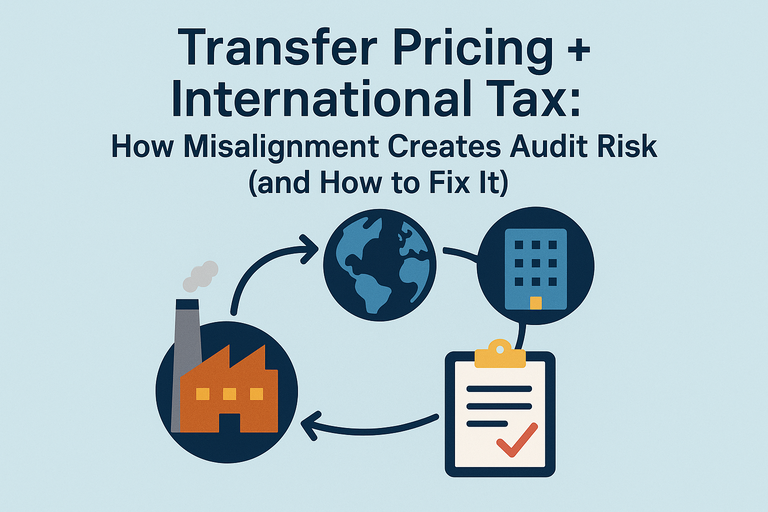
Transfer Pricing + International Tax — How Misalignment Creates Audit Risk (and How to Fix It)

If your company operates across borders and you’re treating transfer pricing as “something we’ll deal with later,” you’re not being pragmatic—you’re stacking audit risk. Here’s the core reality: international tax and transfer pricing are the same problem wearing two different hats. International tax sets the rules for where income should be taxed. Transfer pricing is… Continue reading Transfer Pricing + International Tax — How Misalignment Creates Audit Risk (and How to Fix It)

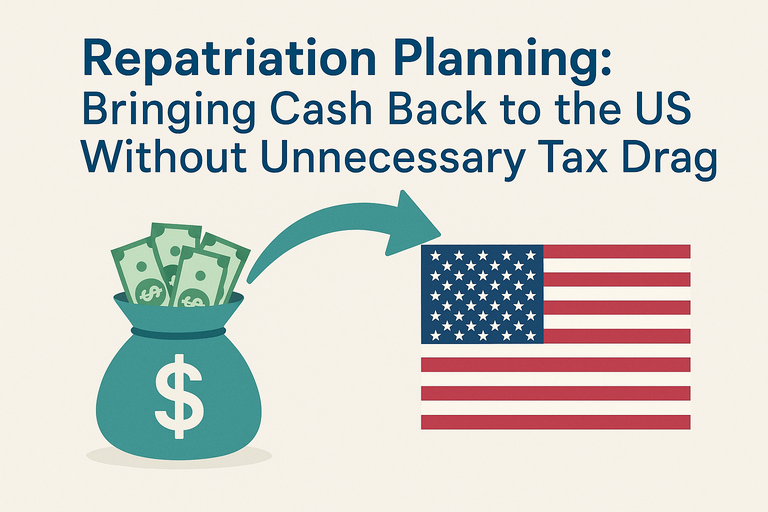
Repatriation Planning — Bringing Cash Back to the US Without Unnecessary Tax Drag

If your company is earning money overseas, you’ll eventually ask the question that separates disciplined operators from reactive ones: “How do we bring cash back to the US efficiently and defensibly?” This is repatriation planning. And despite what many teams assume, repatriation is not just “declare a dividend and wire the money.” It’s a chain… Continue reading Repatriation Planning — Bringing Cash Back to the US Without Unnecessary Tax Drag

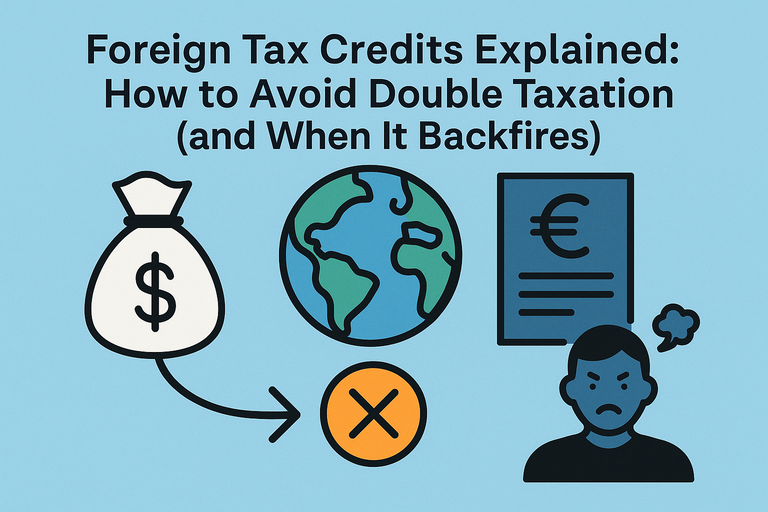
Foreign Tax Credits Explained — How to Avoid Double Taxation (and When It Backfires)

If your business earns income abroad, you’ll eventually face the nightmare scenario: the same profit gets taxed twice—once overseas and again in the US. The foreign tax credit (FTC) system exists to reduce double taxation. But here’s the part most companies learn the hard way: Foreign tax credits don’t automatically “fix” double tax. If you… Continue reading Foreign Tax Credits Explained — How to Avoid Double Taxation (and When It Backfires)

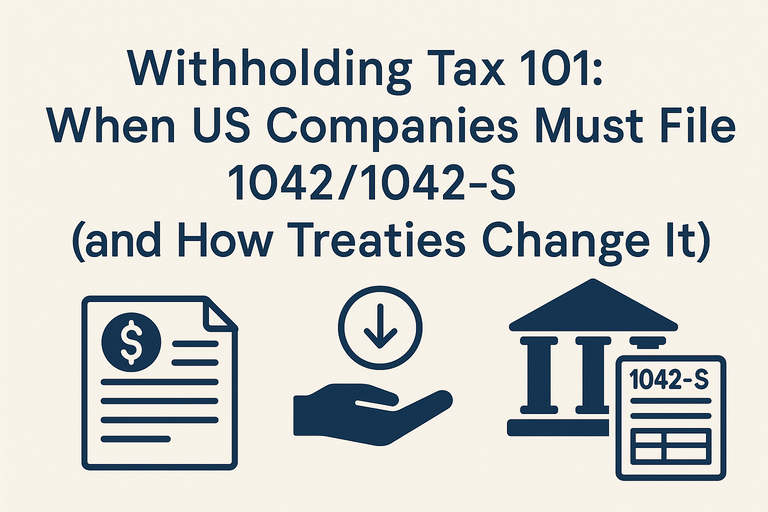
Withholding Tax 101 — When US Companies Must File 1042/1042-S (and How Treaties Change It)

If your US company pays non-US persons—contractors, vendors, licensors, lenders, partners—there’s a decent chance you’ve triggered US withholding rules. And here’s the problem: withholding is not a “tax-season” issue. It’s a payment-time issue. If you get it wrong, the IRS can treat you (the payer) as liable for the tax you should have withheld, plus… Continue reading Withholding Tax 101 — When US Companies Must File 1042/1042-S (and How Treaties Change It)

Inbound vs. Outbound International Tax — The Rules, Risks, and Common Mistakes

Most companies get international tax wrong for a simple reason: they don’t even classify their situation correctly. Inbound and outbound international tax are not two flavors of the same thing. They’re different rule sets, different risk profiles, and different compliance triggers. If you mix them up, you’ll choose the wrong structure, miss filings, and discover… Continue reading Inbound vs. Outbound International Tax — The Rules, Risks, and Common Mistakes

Forms 5471, 8858, and 8865 — Which One Applies When You Own Foreign Entities?

If you own or control foreign entities, US international tax compliance is not optional—and it’s not “just paperwork.” Forms 5471, 8858, and 8865 are three of the most common US information returns that get triggered when a US person (individual or business) expands abroad. They’re also some of the easiest to mess up because companies… Continue reading Forms 5471, 8858, and 8865 — Which One Applies When You Own Foreign Entities?